
Marc Larose
Director VA _Voiles Azores Lda and VAC VA Consulting
I am now working in Fishery Management or more in Management of Fisheries. I believe that sustainable ocean and coherent Coastal Development are possible if we are able to establish local consensus and respond to local needs with Responsible Operations of Coastal activities. Considering that the main activity of Coastal life is Fisheries, we sat by proposing Responsible Fishing Operations and with emerging solutions propose to the fishing communities some modifications of the behaviour of human at Sea.
BOATS DON’T FISH, PEOPLE DO …
 .
.

SEM
SOCIO ECOLOGICAL MANAGEMENT
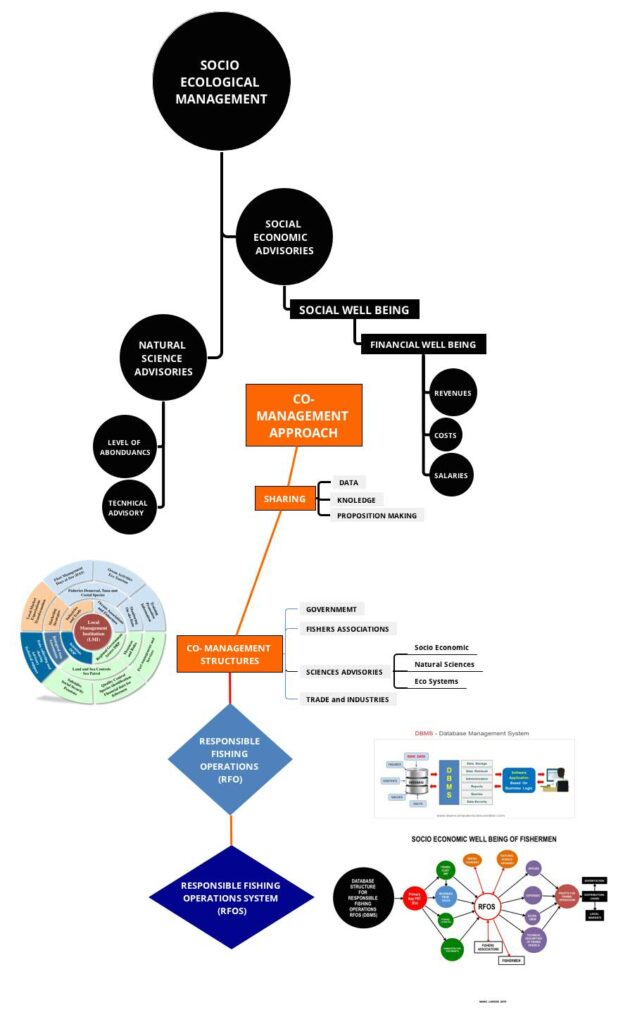
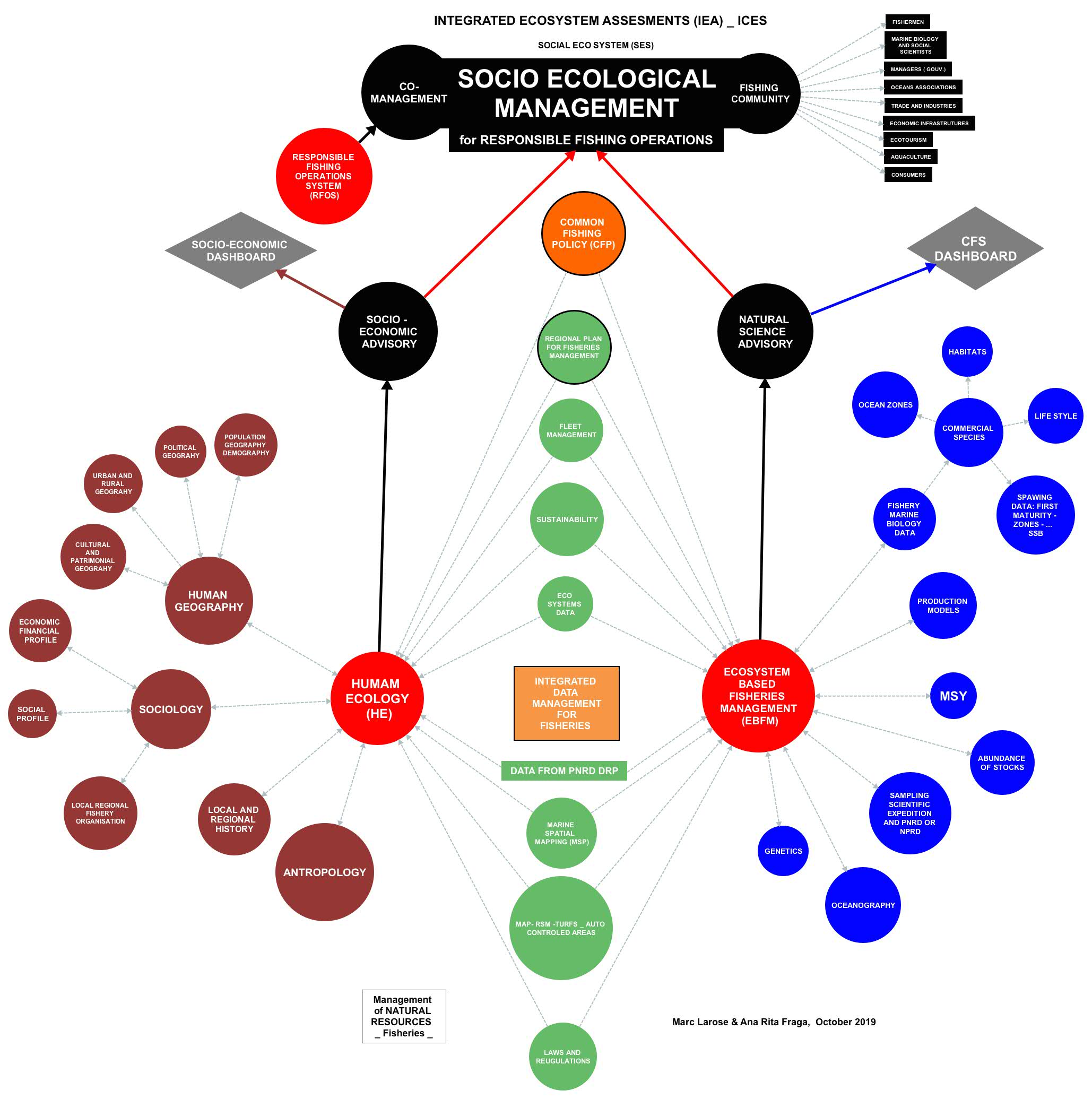 We are proposing new social orientations for Responsible Fishing Operations that could be the social solution to improve sustainability and conservation of naturals resources. It is essential for us to integrate our work with the existing Local and Regional Institutes, Associations, COOP, GAL and other corporations. We need to respect their political objectives, owners data protection and privacy, ... . We are proposing to generate new dynamics between actual coastal communities, coastal organisations and Institutes. Natural Sciences Advisory has been in place for many decades to rule and advise Fishery Management services. The level of advisories will always be an important preoccupation but we need to introduce socio-economic issues following implantation of actual measures regulations and policies and anticipate the consequences of new management orientations.
________________________________________________________________
ALMI
AZOREAN LOCAL MANAGEMENT INSTITUTE
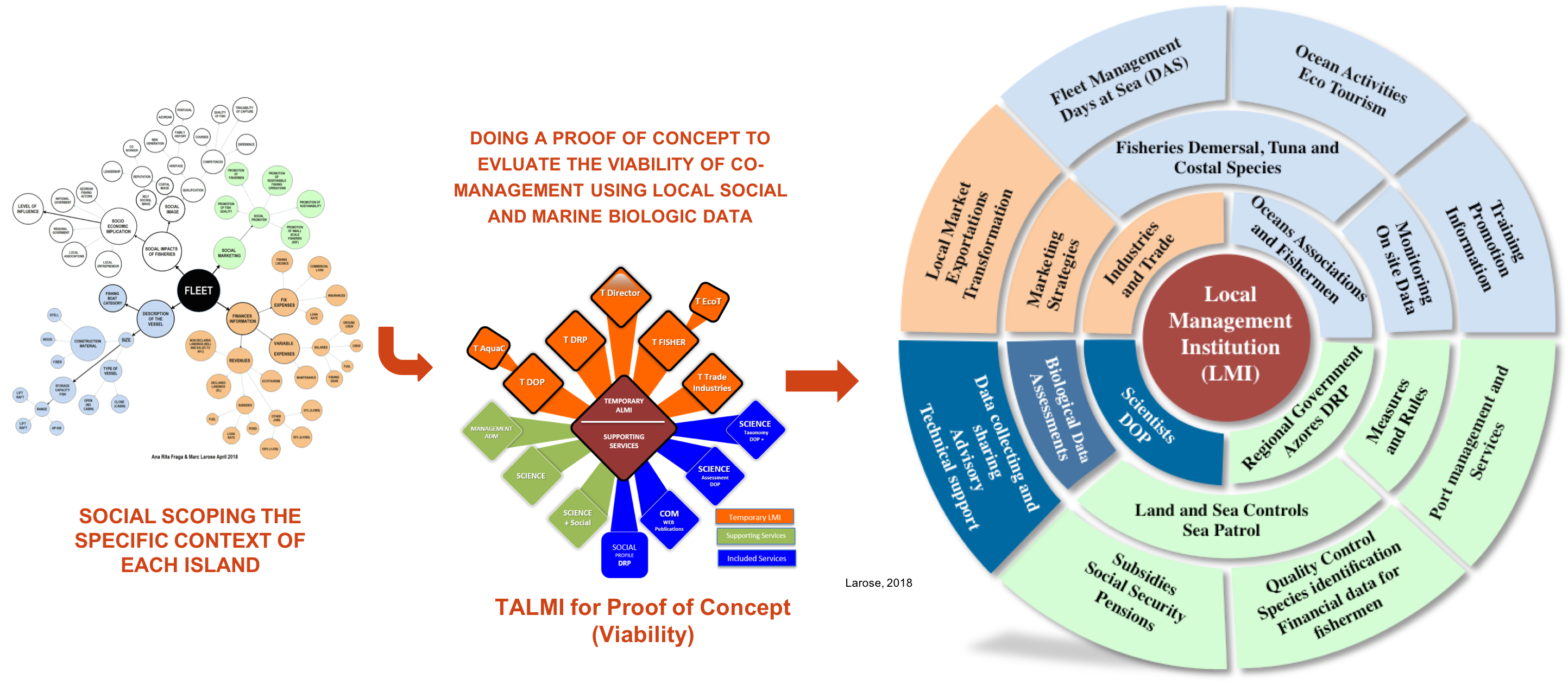
 We will, very briefly, present a new Co-Management Approach: Local Management Institution (LMI) Project. We will discuss the most important aspects of the proposal. Since we are proposing a Co-Management Project, the main builders of the project would be the future members of stakeholders of the local fishing community. It is not for us to organise the LMI but we are simply proposing a basic structure of what could be the future LMI for the Azores.Figure 5.1 Proposition for a Local Management Institution (LMI). Project for a Co-Management Committee.
The diagram propose is a possible visualisation of what could be the future ALMI for the Azores. ALMI would be a reorganisation of our local intuitions for local Fishery Management and management of fishing operations. We would probably have to stimulate the creation of new associations of our ocean activities to represent all levels of stakeholders related to local ocean activities.
We prose a reorganisation of the local institutions with four (4) main sectors of stakeholders:
- Regional Direction of Fisheries (DRP)
- Ocean associations (related to ocean activities)
- Department of Oceanography and Fisheries (DOP/UAç)
- Members of the local Fishing industries
Data sharing and decision-making within this group would stimulate the local fishing community to propose new solutions to respond to local needs and consolidate responsible and sustainable local fisheries. We are proposing a multi-disciplinary project with a very important level of participation of the local fishing community. We are proposing a new and positive vision of the future of local fisheries and promote and create a new generation of fishermen in the Azores.
The proposed solution is popular in many countries of the world to manage Small Scale Fisheries. A Bottom-Up approach to establish a new way to manage natural resources and human resources. Whatever management approach is used there will always be many similarities. Table 5.2 is presenting differences between Top-Down and Bottom-Up management approaches.
Comparing Top-Down and Bottom-Up management approach.
| Management | TOP DOWN | BOTTOM UP _ Co Management |
| Direction | One director Chef Executive Officer (CEO) and/or owner of the company | Cooperative approach with the participation of Stakeholders |
| Decision Making | CEO and Board | Local Management Institution (LMI) |
| Departments | Individual Specific Tasks | LMI _ Co Management |
| Data | Produced by departments | Establish by Consensus and taking in account the community visions |
| Consensus | Not needed | Essential |
| Solutions | Applied by Board or CEO | Necessity of consensus. Emerging from community |
| Control | Controller (Departments) | Honour systems _ Auto regulation and Self-Management |
| Social tissue | Salaries and Internal promotions | Sharing Data and Decision Making _ To be part of the solution. |
| Credibility | Accounting _ Control Measures | Data Sharing to increase. Transparency |
The diagram could be the first document presented to begin the discussion of members of the co-Management committee (LMI). We have to start with the first proposition to establish some basic consensus within the fishing community. A question of Management efficiency and an obligation of sharing and establish communications between all stakeholders or members of the LMI.
________________________________________________________________
DBMS
DATABASE MANAGEMENT SYSTEM
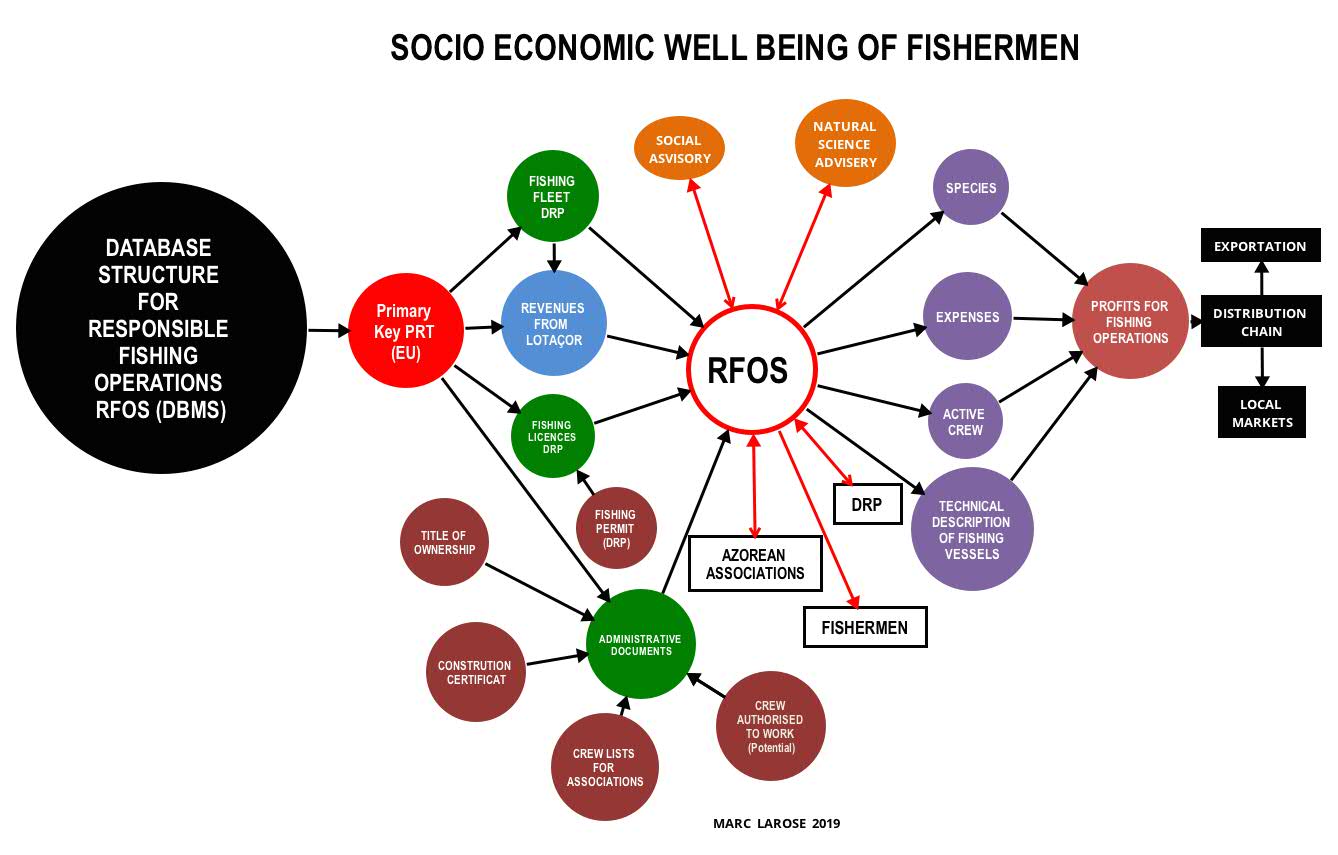
RESUME - ABSTRACT
Managing Fishing Operations could be a solution for conservation of the Oceans and propose a better social and financial future for Fishermen and Boat Owners and we could also be able to better respond to human food needs for upcoming years. Human Behaviour at Sea could be the solution to overcome the Tragedy of the Common (Garret Hardin,1968) and inspire a new fishing paradigm by promoting emergent new Ocean Conscience attitudes and inspired new emerging human approaches to Fishing Operations.
We are looking forward to reorganising the administrative process of existing Azorean institutes and organisations by creating new management tools gathering existing data and propose to integrate Naturel Sciences and Social Sciences advisories. We could be able to generate new relations between existing data and create new categories of data for management purposes. We could be able to transform, in collaboration with Local Fishing communities and inspire new human behaviour at Sea. In the same stroke, we could also propose to local and regional Fishing Communities new concepts for Responsible Fishing Operations and offer administrative support. To do so, we will need to, in collaboration with all members of Fishing Communities, to establish new ways of doing to manage fishing operations and improve human behaviour at Sea. We would need to improve management processes and encourage responsible actions at all levels of practices in fishing communities, fishing institutes and organisations.
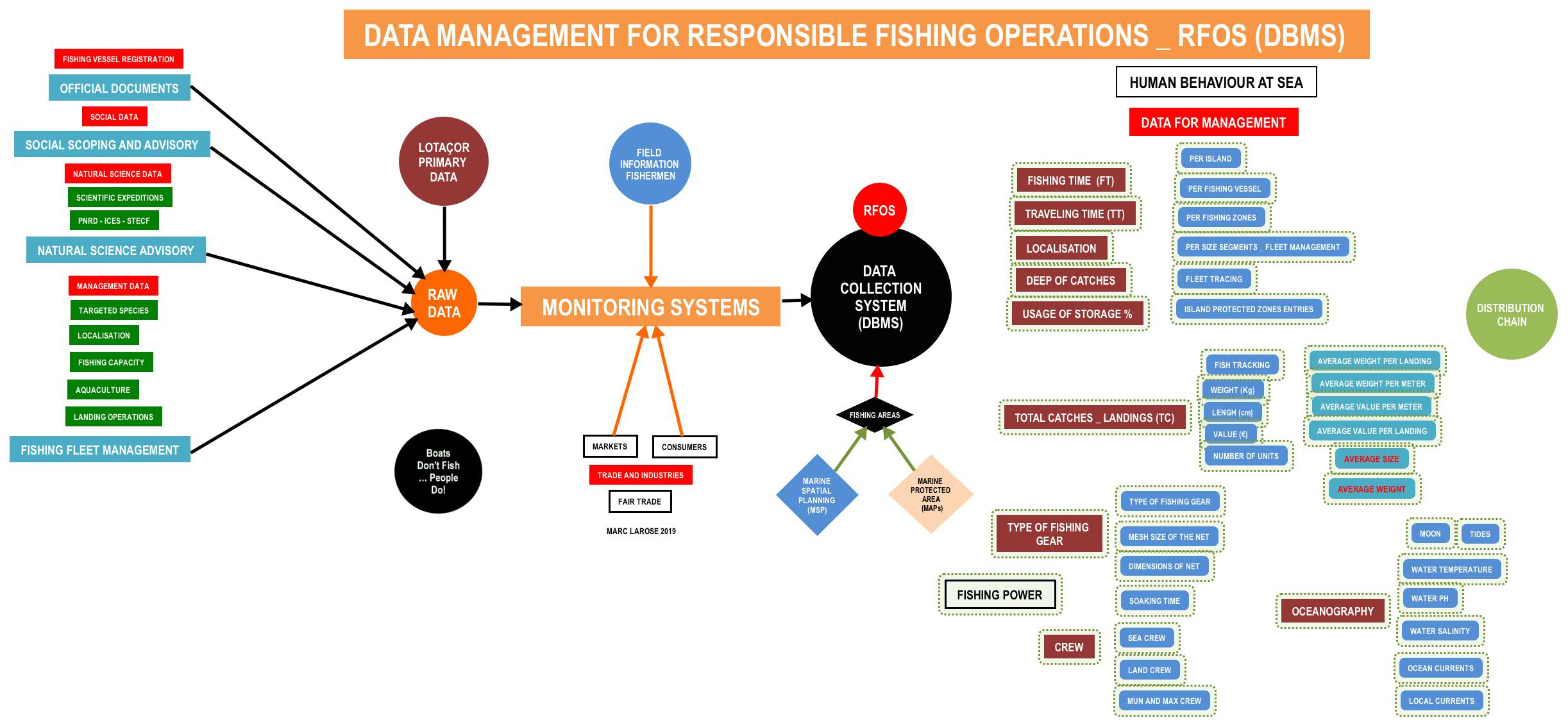
We would need to focus and be driven by new Human Behaviour of Fishermen at Sea (HBS) to generate responsible fishing operations. Responsible Fishing Operations System (RFOS), would be a management tool used by the regional Department of Fisheries (DRP), the administration of Fishermen and Boat Owners Associations, the Natural Science and Social advisory comities to share data and knowledge among members of the communities to support Co-Management groups and propose new orientations and solution to the regional government.
Using the financial models proposed by the Case Study “Financial Well Being for fishermen in Small Scale fisheries (SSF)”, done in collaboration the Federação das Pescas dos Açores, we could integrate the non-nominal information to management solutions and create new principles for fleet management and establish sustainable and responsible fishing activities. We could simplify the administrative processes and procedures, give better service and information to fishermen associations and offer support for financial analyses of units of production (fishing vessels). We would be trying to give fishers a better future and improve social Well Being.
 We are innovating by the integration of social studies and advisories for Management of Fishing Operations and Ecosystem Based Fishery Management. By elaborating new fisher Paradigm in collaboration with fishing communities, we would be inducing new forms of human behaviour at Sea and supporting emerging more Responsible Fishing Operations.
Fishermen have to be part of the solution and
modify their behaviour at SEA.
We need to propose self-controlled behaviour for sustainable EcoSystems.
________________________________________________________________
FINANCIAL WELL BEING OF FISHERMEN (FWBF)
FINANCIAL WELL BEING OF FISHERMEn
Financial Well Being is the most important topic for Social Well Being and survival of small and coastal communities including Small-Scale Fisheries. Other critical matters related to Social Well Being for the members of these communities are i) Local basic services (education, health services); ii) Fisher distribution in the 4 Islands; iii) Management of natural resources. Producers, fishermen, sea workers and farmers are key elements for small local coastal communities, directly related to exploitation of local natural resources on land and sea. By defining the concept and boundaries of the Financial Well Being of Fishermen, it would be possible to promote the fishermen profession, target the needs and ensure the survival of local coastal communities.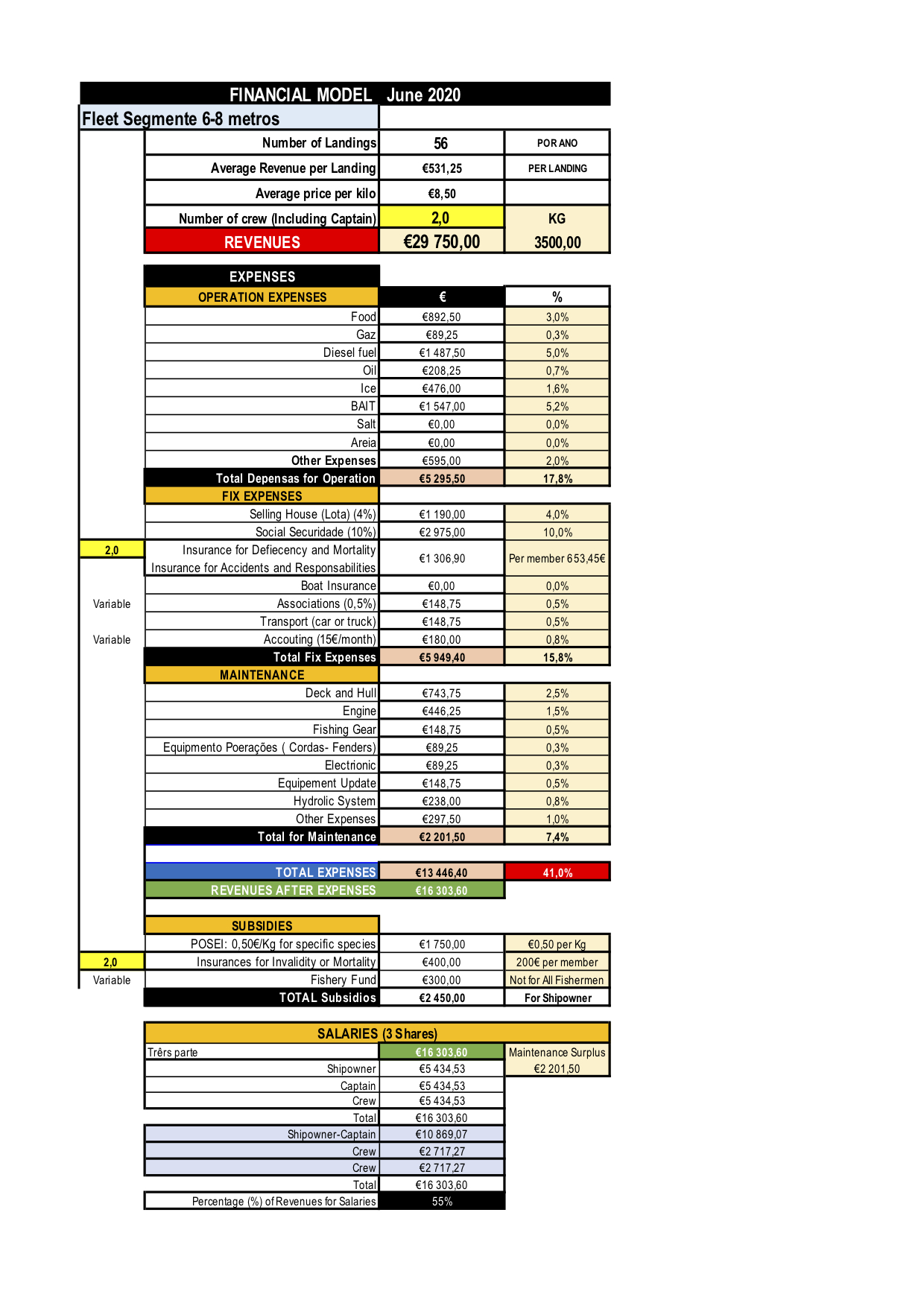
To be able to ensure the subsistence and viability of Small-Scale Fisheries (SSF) in the outermost regions of the European Community, we need to understand the financial conditions of local producers (fishermen) and production units (fishing vessels). In this report, current data of the fleet was collected and analysed, in four islands of the central group of the Archipelago of Azores, Graciosa, São Jorge, Pico and Faial. A Financial evaluation was conducted as the result of fishing operations for each production unit, as well as the level of revenues, working conditions (number of landings), estimates the percentage (%) of the categories of operational expenses per year were assessed. While estimating the average level of profits per meter and per landings, Revenues vs Expenses (fix and operational) per landing per vessel per year, using five (5) segment of the fishing fleet: < 6 meters, 6 to 8, 8 to 10, 10 to 12,12 to 15 and > 15 meters.
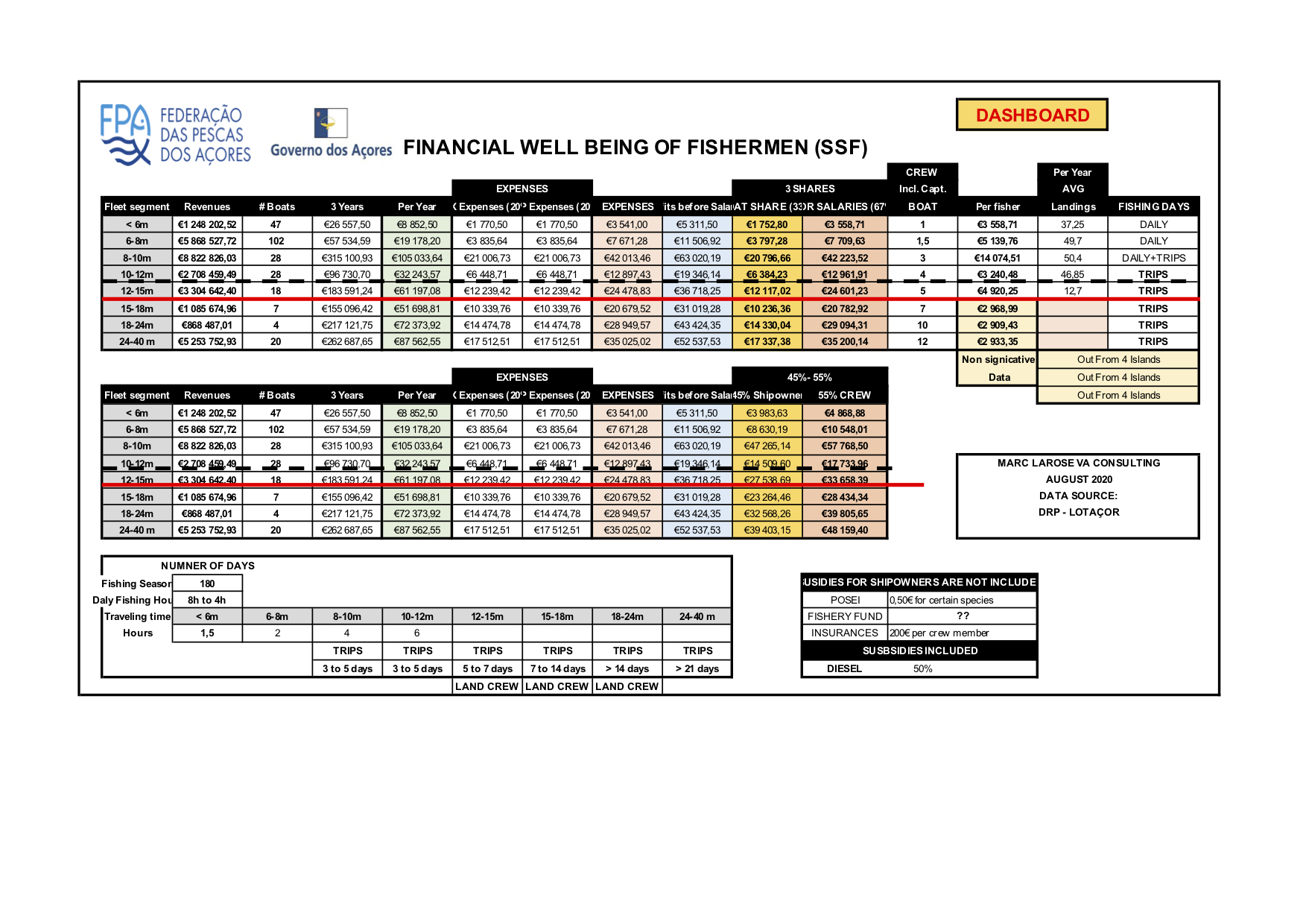
This study will propose management tools to target and address describe the issues to achieve the Financial Well Being. By understanding human behaviour at sea, it can be added value for promoting Responsible Fishing Operations (RFO), induce modifications of the Fishermen Paradigm, stabilizing revenues for all sea workers and improve sustainable and responsible fishing activities.
AZOREAN DISTRIBUTION CHAIN
The Azorean fishing activities are producing a quantity of fish for the Azorean that is too large for local markets but too small be able to influence the European or American Markets. The Azorean fishing volume is to low to be able to influence market prices even if the quality is better than many countries because of the usage of artisanal fishing techniques. We could say that prices and selection of species are established by second Buyers in European and America. For the same price Azorean offer quality than over producers.
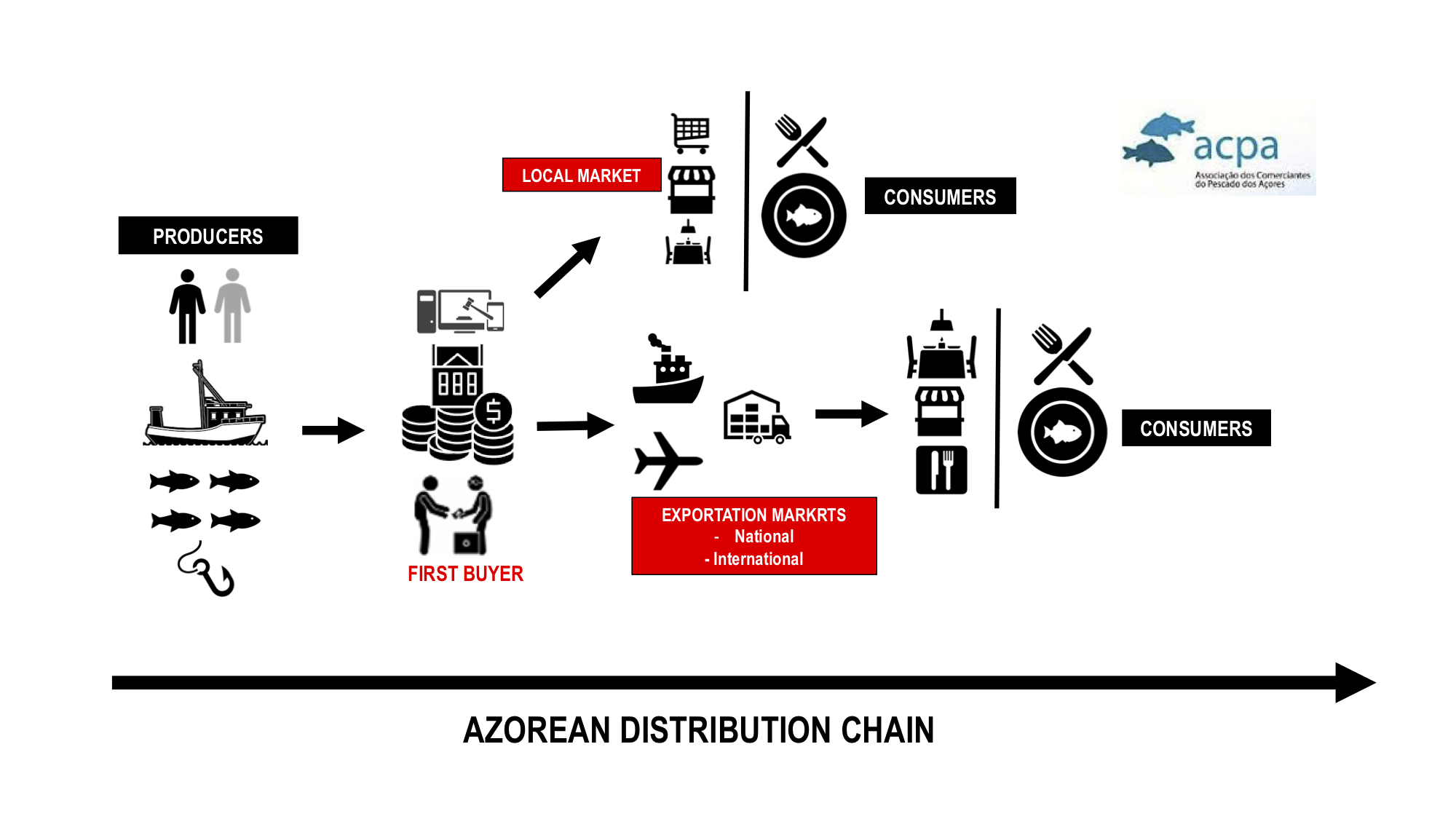
The three (3) main exportations of the Azores are made by local producers, we are talking about FISH – Milk and Beef. Between 2007 and 2013 the average landings of fish in the Azores was 14 088 956,5 Kg for a value of €36 202 389,12 and an average reference price of €2,65.
At this time, 65 to 75% (APCA, 2013) of fish landings are exported to Europe and United States. The fluctuation of percentage is related to the volume of tuna un relations with prices and weight. So only about 20% of Azorean fish is distributed in the local market. Local market could be defined by local stores (fish Counters or Fish stores), fish both by restaurants and local industry (Fish canning – Santa Catarina). Local commercial fishermen are allowed to use 10% of theirs catches for personal consumption. We could then say that 25 to 30% of declared landings are locally or Regionally consumed. Azorean fisheries are depending about 75 to 80% of the commercial landings on exportation. They are playing with major actors of world fish Trade and Distribution.
To be able to export fish Azorean members, until now, only depend on maritime and air transport. The Azores are selling fish based on the traditional fishing operations (artisanal) quality of their products but cannot hope to have better fish prices because they are competing with very big players. They do not have access to a Hight Quality market similar. It has been shown that the level of communication between producers and exporters or distributors is very low if non- existing.
________________________________________________________________
COASTAL DEVELOPMENT (CD)
Sociology and Management of COASTAL DEVELOPMENT
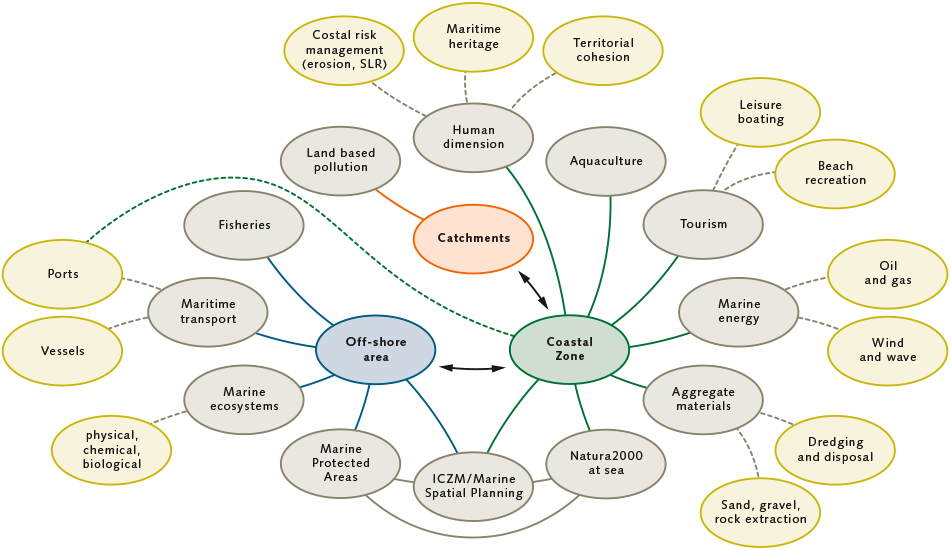 Sociology is very important in Fisheries; social and financial issues have an important impact on Local Fishing Communities and Coastal Development. To need to be able to manage Small Scale Fisheries (SSF) and Coastal Development we would need a management tool integrating all levels of validated Data. We need more than only objectives and indicators for local policy and decision making, we need practical data to solve social, structural, financial and economic issues for all level of stakeholders. It is not because we are able to define Social Objectives for Fisheries than we would be able to generate emerging solutions with local communities. How can we organise the results of our social scoping to evaluate Social and Financial Well Being impacts and issues for Local and Regional communities? We need an integrated Management Tools to go from objectives and results and to be able to monitor the state and impacts our decision and policymaking. The next tale is an example of Social objectives for Fisheries.
Table for Social objectives for fisheries management identified through the workshops.
https://ssq.squiz.cloud/__data/assets/pdf_file/0029/67961/coastal-management-plan.pdf
Commercial, recreational and charter communities
1.1 Provide flexible opportunities to ensure fishers can maintain or enhance their livelihood
1.2 Maximise cultural, recreational and lifestyle benefits (including health benefits) of fishing
1.3 Ensure appropriate mechanisms exist for fisher involvement in the development of management advice
1.4 Improve the skills of fishers and fisheries managers participating in management advisory processes
1.5 Stakeholders have a high level of trust in the management of fisheries
1.6 Maximise stewardship of fisheries resources
1.7 Ensure transparency of the decision-making process by management bodies
1.8 Ensure equitable treatment and access for fishers
1.9 Ensuring access to adequate infrastructure
Indigenous communities (Artisanal Fisheries for Azorean Fishermen)
2.1 Maintenance of cultural and heritage values related to fishing activities in indigenous communities
2.2 Ensure provision of access to ‘sea country’ to enable the continuation of traditional activities
2.3 Ensure appropriate consultation of Local Fishermen
2.4 Ensure open and transparent communication
2.5 Develop economic opportunities
2.6 Ensure collaborative inputs by Local Fishing communities
Regional and associated communities
3.1 Positively influence fisheries related socioeconomic benefits for regional communities
3.2 Facilitate and support the cohesion and connectedness of fishers with their regional communities through fisheries management
3.3 Maximise community trust in fisheries agencies to manage fisheries
3.4 Ensure fisheries management contributes to the maintenance of cultural and heritage values related to fishing activities
3.5 Facilitate capacity building for community members to enhance the stewardship of fisheries resources.
_____________________________
https://ssq.squiz.cloud/__data/assets/pdf_file/0029/67961/coastal-management-plan.pdf
We consider that Small Scale Artisanal Fisheries (SSAF) are the main activities for Local Coastal Development in the Azorean waters. Artisanal fisheries are done with the 3 miles coastal zone of Azoreans Islands and are the main ocean activities of our region. By empowering local Fishing communities, we are insuring and stimulating Coastal Development of Local communities by ensuring the subsistence and viability of Small Scale Artisanal Fisheries.
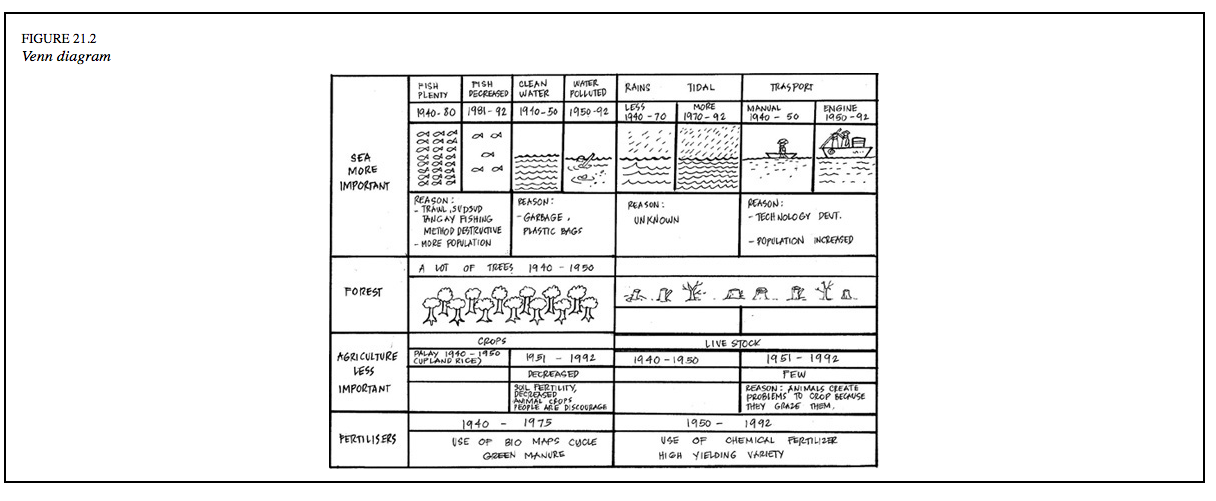
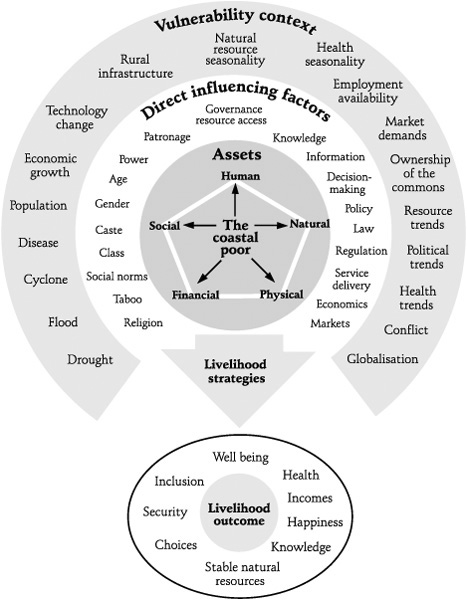
________________________________________________________________